Two rivers and two countries are tied together in this novel by Shobha Rao, reflecting the duality of meaning in its title, Indian Country. One is India, of course, a country full of Indians. The other is the Native American areas in the western US that were called ‘Indian country’ in the 1800s. Two rivers flow through the Indian countries of this novel: the Ganga (Ganges) flows through densely populated cities and states, while the Cotton River in Montana runs past vast but lightly populated acres of farmland.
Here, on the Cotton River, there were no ghats, no temples; no one sat by this river and prayed for enlightenment.

Janavi and Sagar are a recently married couple in Varanasi, who move to Montana when Sagar is hired to remove a dam across the Cotton River. They married almost by accident, when Javani’s older sister Rajni deviously wriggles out of the proposed marriage. Janavi is angry and unhappy about the marriage, and a year later there is little affection between her and Sagar.
Culture shock upon moving from crowded and lively Varanasi to a quiet small town in Montana would seem to be an obvious feature to explore, but to her credit, the author deals with this familiar topic lightly. Janavi and Sagar certainly notice the differences, but the surprises are much more subtle than is usually portrayed. Janavi speaks with an unidentifiable accent due to her training in a call center. Sagar is fascinated by water movement and focused on his engineering work. In her long lonely hours while Sagar is at work, Janavi thinks about what she sees.
What did American children think about? It was probably much the same things that Indian children thought about, though, compared to the street children she’d worked with, the ones here seemed more vulnerable, less cunning, and to bore easily; she wondered if that was true of the adults too.
The inner monologues of Janavi and Sagar are expressed in language that is neither strongly Indian nor American. Janavi refers to ‘capsicum’ rather than ‘peppers’, but mostly, both hers and Sagar’s language is generic, likely a deliberate choice by the author.
Of all the things he wished he’s said, he should’ve told them that they’d brought him all the way over from India because he was good, because he was one of the best hydraulic engineers at the Central Water Commission, which made him one of the best in India. And what was more, he wished he’d told him he was experienced. This dam is nothing, he should’ve told him, compared to the hydroelectric dams I’ve worked on [..]
This is an ambitious novel. There are many layers: the Native American and Indian myths about the rivers; the vanishing Native American women; Janavi’s work with street children in Varanasi; the slowly changing relationship between Janavi and and Sagar; casual racism; the angry distance between Janavi and her sister; the mysterious drowning of a woman called Renny at the Cotton River dam and the attempt to find out why and how she died. This is a lot to explore in a novel, but Shobha Rao does a very nice job of tracing them all, leaving some things unsaid so the reader can fill in the outlines.
Of these threads, the relationship between the couple is particularly lovely, with overt chilliness, occasional internal desire, and a sense of permanence despite the unusual circumstances of their marriage. The mystery of Renny’s death doesn’t seem all that mysterious, and is incompletely resolved. Given that so much of the book is focused on violence against women, it seems a little odd that there are so few details about the original murders that led to the drowning of Renny.
In addition to this main plot, though, there is a series of twelve vignettes scattered through the book. Some are set around the Ganges — Theo Mortimer in 1814 who sees a silver wolf on a sandbank in the Ganges; Jena who dies during childbirth in 1835; Avni who hangs herself in 1876; Miranda who is hit by a bus in 1968. The rest are set around the Cotton River — Hiram Hicks who shoots a wolf in 1865; Essie, a young Indian girl who is murdered in 1868; Caroline who has a traumatic death in 1899.
At first, I assumed these were threads that would eventually connect to the main story, but it became obvious that each vignette was quite independent of the next, and of the central plot. What these vignettes have in common is that each is about the death of a woman. They are all relentlessly bleak and desolate. Each one is beautifully written, and would do well as a short story. For me, though, they detracted and distracted from the main plot of this novel.
Magical realism is present whenever the Great Gray Wolf appears, and in the river myths, but there’s enough balance that it doesn’t seem too much. Occasionally, though, the main plot also veers into deep symbolism, and those sections were, I thought, rather hand-wavy and unconvincing. Janavi is another name for the Ganga. Sagar Island lies at the mouth of the Ganga. Is that meaningful, somehow? Are they bound together for eternity because of the connection (slight, to my mind) between their names? Surely many men are called Sagar, and many women are named after rivers. Or there’s this:
And then — patterns, memory — something Norma had said also came back to him. Sometimes it’s three at once. [..] He hadn’t been imagining it … there was something with the threes. Maybe everywhere in the world, given the Trinity and the Trimurti and even his affection for the molecular formula for water — who knew how many other sacred variations of the number three there were in the world.
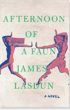
This novel has a gorgeous cover: elegant, striking, and evocative, reflective of the rivers in the book. It’s such a pleasure to see such a cover without the hackneyed woman in a sari, or the back of a woman with a dupatta framed against Mughal arches, or hennaed feet or hands. I couldn’t find the name of the cover designer, but plaudits to her or him.
A novel and author worth reading, but also uneven.














Coincidentally, I had started reading Indian Country the day this review was posted. I had read the prologue and the beginning of Chapter 1 – twice, the transition not making much sense, but pressed on. Some thoughts: it’s about 200-300 pages too long; I kept waiting for the mysterious death and almost gave up; the vignettes – I too thought they would tie in somehow to present-day characters and kept looking for clues – by the last third of the book, I skimmed them, they broke the flow each time details of Renny’s death and Sagar’s investigation got going; I’m not sure the wolf and dogs and porcupines added anything; the bits about Sagar’s brother and Jahnvi’s sister- each’s early family issues were quite nicely presented early in the book, but they kept popping up over and over again. Back and forth through centuries and continents, so many characters – it all made me dizzy. What I liked: desis in Montana – that’s different! and why I picked up the book; their marriage and relationship changing, growing – both within their apartment and on their drives; the details of building and removing dams, oddly, interested me the most :-); the prose about rivers, whether in India or Montana – I would have liked more Native America ‘stories’ instead of so many of those vignettes; last but not least, Rao’s prose about Montana itself – prarie landscape, the small-town-ness and Big Sky-ness, all nostalgic – I used to go to Montana almost every year for work not too long ago and as a child one family vacation, we drove across the state – Rao captured it all wonderfully.
Reeta, I can’t disagree with anything you’ve said. I think she’s a good writer, but took the vignettes too far. They were all perfectly good short stories by themselves, and should have been published as a separate collection, I think.
I did like her writing quite a bit, especially (as you say) the bits about Montana and the relationship of the young couple.
I liked this book very much indeed. It is highly original, and there are really not many writers of South Asian-Indian origin writing so evocatively about Montana and its landscape! It is great to read that Reeta who has driven across this landscape herself, thinks it is well captured in the novel. I also didn’t like the vignettes so much – some were nice, but many were just disrupting the flow of the plotline. I wanted to get back to Sagar and Janavi. I liked Sagar a lot – he is such a lovely character. Janavi and her sister seemed not quite as well developed as characters. Sagar’s enchantment with rivers was quite endearing. I also think Rao tried to do too much – for e.g. Sagar has unresolved issues with his brother’s injury but that thread goes nowhere in the end. Likewise Janavi’s sister, Rajni, being abused, that thread also goes nowhere. So yes, a very imperfect and uneven novel, but I commend it for its originality, and its layering of Native American culture with Indian Americans, most unusual. Renny was also a lovely character! The Grey Wolf didn’t do much for me, but I’d be the first to say magical realism doesn’t do much for me, so that may be my own shortcomings if I didn’t appreciate it. Also, the procupine story….sigh…those kinds of folksy stories also don’t do much for me, whatever culture they come from, and it seems practically every culture has them – so again, probably my lack of appreciation rather than a criticism. Oh, and I loved the descriptions of Varanasi, the mist over the river, and all that, just beautiful. It was also great how uncliched the relationships n this novel are, the relationships characters had with each other, I mean. After reading so many type cast diasporic Indian stories, this is refreshing.