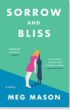
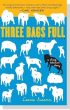
Our protagonist is Zelu, a 2nd generation Nigerian American (Najiamerican) paraplegic woman, who no longer has use of her legs after she fell out of a tree at 12 years old. At the start of the novel, 34 year old Zelu is fired from her job as adjunct professor and has just had her novel rejected yet again by publishers. The novel begins at the wedding of one of her sisters – Zelu has 4 sisters and a brother. Her father is a retired engineer, and her mother a retired nurse, but somehow, they seem immensely wealthy. Her siblings are a surgeon, a neurologist, an engineer, a lawyer and a med school student. On Zelu’s father’s side,
every one of her father’s siblings had earned a PhD or the equivalent and was wealthy” (p9)
Clearly, Zelu’s family are from the highest echelon of Nigerians, and can hardly be considered an average or ordinary Nigerian family. Zelu’s maternal grandmother was not the queen of Ondo State, but she was a second wife to the king, with a lot of power and respect. Zelu’s mother was raised by the queen who favoured her, and there are some hints at how the crown prince resented her and sabotaged her, but this story was never properly followed up on.

Zelu’s family find her career as an author strange and did not think it would lead to making much money. In fact, Zelu goes through life convinced no one understands her, and feeling always wronged by everyone. That’s her general attitude which renders her a prickly and discontented character. Despite the novel trying to show how strong and adventurous she is, she comes across as petulant and demanding, self-centred and obtuse. Zelu is always narrowing her eyes, snapping at people, sucking her teeth, being disgusted by their lack of understanding of her, anger is always “boiling in her belly”; she is spoilt, perpetually regarding herself as misunderstood, and very demanding. It is just amazing she has a boyfriend who loves her so much, but less amazing that she exasperates her family.
At the low point in her life, with no career, no novel published, and no partner, while seemingly all her siblings are doing so well in their lives, Zelu is forced to move back to live with her parents, and writes a novel, which becomes a bestseller, earning her supposedly ‘multi multi millions’ – which is unusual, even for a best seller. The novel, called Rusted Robots, is a sci-fi novel about Humes, humanoid bots located in Nigeria which love stories,
“the Humes mined, coveted and shared stories. They savoured them like ambrosia. This painted their world and worldview” (p32)
Meanwhile, their enemies are AIs known as NoBodies because they do not need physical bodies and just exist in any network. Of course, NoBodies are the baddies who dislike stories. The Humes and NoBodies go to war. This extremely simplistic and cliched supposedly futuristic novel is apparently what propels Zelu to fame and fortune and social media stardom.
The novel is written from many different points of views, each in a different chapters – supposedly interviews with her siblings, interspersed with chapters from Zelu’s bestseller (the book within a book idea) and chapters from Zelu’s perspective. The book chapters are the worst – dull, pedestrian, cliched, plodding, in quite flat verse – it is really puzzling why anyone would think it is a good book or that it should have captivated so many as to make it a bestseller.
The best parts of the novel are about identity. Zelu and her family are Chicagoans, but they return to Nigeria often, and although they cannot speak Igbo (their father’s language; their mother is Yoruba, a princess, apparently), they love Nigeria, are close to their Nigerian relatives and family, and are comfortable there. Throughout the novel, whenever Zelu is hungry, there is mention of her eating jollof rice, stew, and fried plantain, repeatedly, always these items. No doubt these are tasty, but that’s all there ever seems to be; the lack of variation is surprising. However, in detailing Zelu’s mother’s cooking, other dishes are mentioned, such as
“egusi soup, efo riro, moi moi, okra soup, amala, pounded yam, rice and stew, fried plaintain, pepper soup, and of course jollof rice” (p81).
As expected, Zelu speaks like an American, but the cadences of her mother’s speech are charming:
“You already cannot walk, why go on an also confuse your brain now? (p72)
“Ah ah! Secret, what are you doing?” (p72)
It is also fun to read about how loud and boisterous and blunt the Nigerians can be in their social lives, in fun and in arguments; a lovely flavour of Nigerian culture is captured in some glancing moments in the novel. Zelu does at least seem to have a healthy relationship with Nigeria; she loves going there, she feels a strong connection, but she is definitely an American first and foremost. It is nice that she is especially touched she has fans in Nigeria, which after all, is where she set her novel, and is very distressed when the movie set her novel in America instead.
The book’s discussion of identity is not just about diasporic Nigerian Americans, but about disability. Zelu is rich and famous enough after her successful book to be contacted by cutting edge scientists to try using exos, some kind of walking device which restores her the use of legs (though the description of how exos work is so vague and imprecise that it is hard to imagine what they actually are). They are a metal mesh apparently which lock onto her legs and make them work. Surprisingly, jut as her loving family did not initially celebrate her success as a bestselling author, they now do not celebrated her being able to walk again. When Zelu walks into the family home, they greet her with,
“Why have you shamed your family? In the face of God!” (p175)
It is really hard to believe this close-knit and loving family would be so very dismayed when Zelu is able to walk again. However, it must be mentioned that to get her exos, Zelu just left home without any word of where she was going and stayed out of touch for a whole month. Her mother shouts,
“This isn’t a hotel! And we are your family! You didn’t call once. You left no information about where you were. We had to find the professor you worked with ourselves. What if something had happened to you?! You can’t walk! Jesus, o!” (p175).
The question of identity becomes even more fraught when Zelu goes on a talk show to discuss her book and is ambushed by the presenter suggesting she has betrayed disabled people by taking on her exos and being able to walk.
In all, it was not a difficult read, and it was enjoyable getting a flavour of Nigerians culture, a glimpse of their values, their interactions. But it was not wildly impressive or madly original or particularly praiseworthy. It has been compared to others like Yellowface by RF Kuang, probably because it deals with the literary publishing world, but it is not as compelling as Kuang’s novels, and does not really engage with the world of publishing in the same way. Also a (minor) flaw in the writing: a lot of detail, especially about the siblings, go nowhere, there are a lot of loose threads not followed up on. Readers are forced to keep reading chapters of the novel within the novel, even if that novel is not interesting or well written. Supposedly Zelu herself is not a sci-fi reader but writes this blockbuster sci fi novel that is said to have hit the sweet spot of the genre and with the fans. Not impossible, highly improbable….but having been forced to read chapters of Rusted Robots, I take that back – impossible. So much about this novel doesn’t quite hang together, and the reader is asked continuously to celebrate Zelu, a character who constantly seems to carp at the world for not celebrating her enough. This is probably ending the review on a harsher note than intended; it has its moments, and the best ones are the depiction of Nigerian and diasporic Nigerian identity and interactions.






Recent Comments