It’s been 12 years since Chimamanda Ngozi Adichie published her wonderful novel Americanah. In the meantime she has not been idle: she has written two books on feminism and one on grief, a collection of short stories, and a children’s book, apart from a host of stories in Granta and The New Yorker and the like. A novel, though, can explore situations in depth and length far beyond a short story, and many Adichie readers must therefore have been delighted to see her new novel Dream Count released this year.

Adichie has set this novel in her familiar worlds of Nigeria and America, but in a unique time period for the entire world — the Covid pandemic. The novel is centered around Chiamaka, living isolated in a Maryland suburb, talking to her family and friends via Zoom. Confused, like everyone else, about what to do and avoid.
Words and warnings swirled and spun. [..] Don’t touch your face; wash your hands, don’t go outside; spray disinfectant; wash your hands; don’t go outside; don’t touch your face. Did washing my face count as touching?
There are regular family Zoom calls with Chiamaka’s parents and one brother in Nigeria and another brother in England. The conversations are wonderfully familiar: people throwing out the latest Covid rumours, self-congratulatory comments on the low death rates in Nigeria compared to those in Europe, and undercurrents of the regular relationships within the family.
I said high-dose vitamin C was sold out everywhere online. Bunachi, of course, knew it all and said vitamin C didn’t prevent the virus, and he would send us the recipe for an infusion made with fresh basil, which we should inhale daily.
Chiamaka’s best friend is Zikora, living in D.C.
[She] called one afternoon and said she was at Walmart buying toilet paper. [..] Zikora switched to Igbo and continued, “People are shouting at each other. I’m really afraid someone will soon pull a gun.” [..]
We never spoke pure Igbo — English words always littered our sentences — but Zikora had vigilantly shed all English in case strangers overheard, and now she sounded contrived.
Then there is Omelogor, Chiamaka’s beloved cousin in Abuja, Nigeria.
Only with Omelegor was silence tolerable.
Chiamaka, Zikora and Omelogor are all relatively wealthy, but the last main character is not: Kadiatou, who helps to cook and clean Chiamaka’s house in Maryland, and is somewhere between companion, friend, and retainer.
From braiding Chia’s hair, she began cleaning Chia’s house.
The novel seems like Adichie’s typical sharp social commentary until a shocking event occurs that will be familiar to anyone who was reading the news in 2011. Kadiatou is a cleaner at a fancy hotel in Washington DC when she is sexually assaulted by a wealthy and important guest. Shattered, she tells a fellow worker who reports the assault, and there is a trial, publicity, paparazzi, all compounding Kadi’s trauma.
The real-life case against Dominique Strauss Kahn collapsed when his accuser Nafissatou Diallo was in turn accused of lying on her asylum application, and in the novel, Adichie’s anger at the outcome is palpable. In a Guardian article (see here) she says:
“I was so upset by it. I just felt that it was wrong, not just morally, but in what it said about America. The message it was sending to women claiming they have been sexually abused is: you’d better be perfect. You’d better be utterly sinless. You’d better be an angel if you expect to get justice. It’s not just about that character. It’s also about all the women who, because of the circumstances of their lives, are powerless.”
I think she has succeeded very well in depicting Kadi’s life and complications, humanizing Diallo, and stirring the reader’s outrage as well — more power to Adichie and her Kadi!
The Diallo/Kadi case is at the center of the book, but there is much more to it. Adichie pulls no punches when she writes about entrenched sexism in Nigeria. Omelogor is a banker whose boss sees no problems with commenting on her physical attributes:
Mr David [..] came appraising towards me. “Ah, this is the person? God blessed you with brains and also blessed you front and back like this? “
Chia is dating Darnell, who is African-American and very intellectual, and Omelogor contrasts him with her own Swedish man in Adichie’s typical biting prose:
Luuk at least had a sense of humour, unlike Darnell, that love of Chia’s life, who didn’t feel any emotion but could talk about the semiotics of emotion.
Of the four main characters, one might suspect that Kadiatou would be the least fleshed out, as she is from Guinea rather than Nigeria, poor, widowed and abused, a single mother, eventually arriving in America as an asylum seeker — possibly a life not as familiar to the author because of the differences from her own lived experience. In fact, it is Omelogor who I found a little less convincing than the others.
A brilliant child, Omelogor is a very successful banker in Nigeria, dealing with layers of corruption and sexism on a routine basis. As a grad student in America, she has strong reactions to the condescension of the American liberals around and challenges their assumptions in class.
Banking was inherently flawed, a woman called Kaley said to me. [..]
“Where do you put your money?” I asked finally.
A woman called Eve said “That’s right-wing!” Everything she disagreed with she called right-wing, and to call it right-wing was to punctuate it with a full stop. Case closed.
Omelogor’s classes are populated by white and black Americans, a young man with olive skin who often mentions that he is multiracial, and a white South African, which allows Adichie to brilliantly examine race relations in an academic environment.
But it seemed odd that Omelogor, so outspoken in America, could be so willingly subservient in Nigeria, while also commenting on how Americans are so self-righteous, and so sometimes her experiences can seem like a vehicle for Adichie’s opinions rather than being true to the character.
There are sections in all four of the women’s voices, but Adichie wisely avoids the choppiness of too much switching between voices. All four remain quite distinct in personality in the reader’s mind.
Dream Count is another remarkable book by Adichie.
Dream Count
Chimamanda Ngozi Adichie
Knopf, 2025







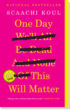




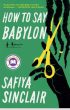


Love the review. The book, not so much, though Adichie is a favorite of mine. It’s puzzling to see smart women, all but one of them born of great privilege, invest so much time, emotional energy, and hopes on a series of undeserving men. One of the characters aptly calls such SOs “thieves of time,” but the book devotes its bulk to such thieves of time. Of course, there are smart, independently wealthy, and successful women who suffer fools, but that almost seems to be the norm in the book. Still found the book worth reading.
Uma, you’re so right, the men in this novel were a pretty sad lot. They were Nigerian, African-American, Swedish, whatever, but generally self centered, unwilling to take responsibility or be meaningfully supportive. I saw them as minor characters, on the fringes of the main story about the women, but it’s true the women spent an inordinate amount of time talking and thinking about them.
I’ve returned the book to the library so I can’t check: were there any positive male characters?
Agree that the men were more peripheral to the main female characters. Hard to say if there were any positive images of men. There was Chuka, stable, loving, solid-as-rock, who I guess was a good man who nonetheless sparked no interest in the reader or his GF. At least one of the awful men and his coterie of snobs made for interesting reading — the ever contemptuous academic (known as the “Denzel Washington of academia” in his circle). The rest, you had to wonder why the women were clinging on to them. More than the choice of the female characters, the choice of the author to spend hundreds of pages on each of them with no higher literary goal was puzzling.
Agree that the men were more peripheral to the main female characters. Hard to say if there were any positive images of men. There was Chuka, stable, loving, solid-as-rock, who I guess was a good man who nonetheless sparked no interest in the reader or his GF. At least one of the awful men and his coterie of snobs made for interesting reading — the ever contemptuous academic (known as the “Denzel Washington of academia” in his circle). The rest, you had to wonder why the women were clinging on to them. More than the choice of the female characters, the choice of the author to spend hundreds of pages on each of them with no higher literary goal was a head scratcher for me.
Hey Uma, Adichie was at the National Book Festival yesterday and was asked why the men in the book were ‘trash’. She laughed and said that all her children were dear to her, and that the father and Chuka were both nice people (paraphrasing). I got the sense she’d been asked this question before and had been surprised the first time, because she did not set out to write male characters who were trash.